In workplaces across industries, a quiet change is underway. The manager who walks into a problem and immediately delivers a solution is no longer considered the gold standard of effective leadership.
A growing body of research and practice points to a different model, one in which the most skilled leaders ask more than they tell, and listen more than they direct.
At the center of this shift is a distinction that many organizations still struggle to make clearly: the difference between setting expectations and providing coaching.
These two functions are often conflated, sometimes treated as interchangeable parts of a manager’s toolkit. They are not.
Setting expectations is about defining what needs to happen. It establishes the parameters, the targets, and the standards against which performance will be measured. It is necessary, foundational work. Without it, teams operate in ambiguity and accountability becomes impossible to sustain.
But clarity about what is expected does not, by itself, develop a person. That is where coaching begins.
Professional coaching is concerned not with the task but with the individual. Its primary currency is not instruction but reflection.
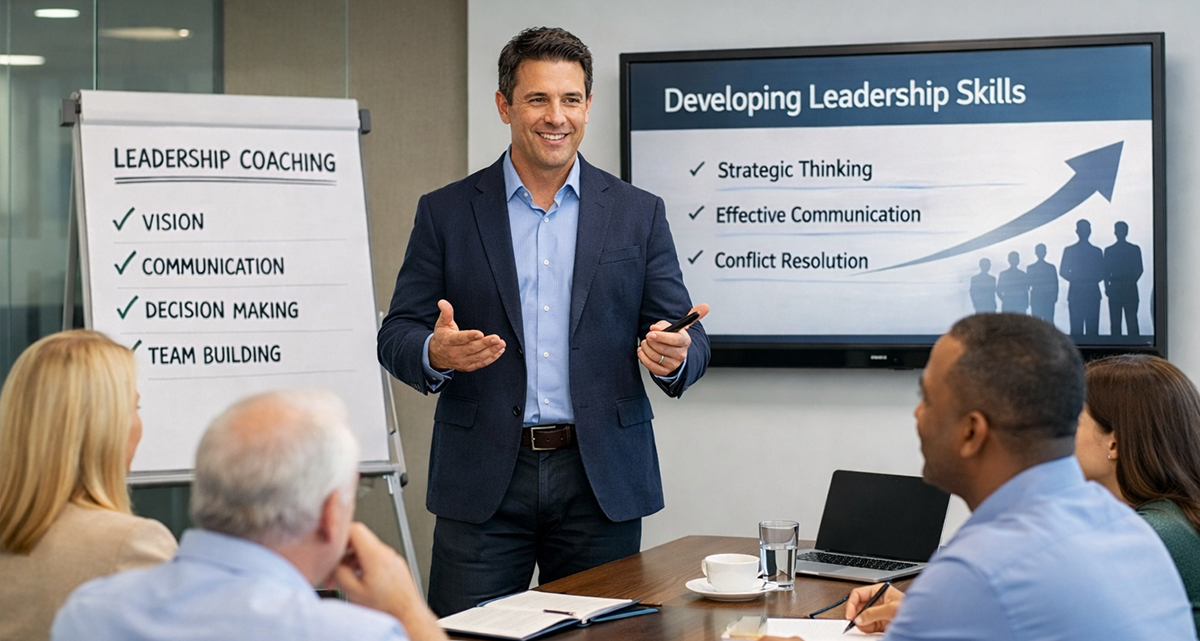
A manager operating in coaching mode resists the pull toward immediate answers. Instead, they ask pivotal questions, the kind that slow a conversation down and invite the other person to examine their own thinking. What is getting in the way? What options have you considered? What would success look like from where you are standing?
This approach can feel counterintuitive, particularly in fast-moving environments where efficiency is prized and decisiveness is rewarded. The temptation to simply tell someone what to do is understandable. It is faster, in the short term. But it is also a short-term investment with diminishing returns.
When a leader consistently provides the answer, the person being led never fully develops the capacity to find it themselves. They become dependent on direction rather than capable of generating it. The relationship, however well-intentioned, quietly reinforces the very gap it is meant to close.
Coaching reverses this dynamic. By fostering self-awareness rather than dependence, a skilled coach helps individuals discover their own pathways through complex workplace challenges.
The insight they arrive at through reflection is far more durable than the instruction handed to them from above. They own it. They are more likely to act on it, and more likely to apply the same thinking the next time a similar challenge arises.
This is the distinction that programs such as Coaching and Mentoring Excellence from Spearhead Training are designed to develop. Rather than treating coaching as a soft supplement to management, these programs position it as a rigorous professional discipline, one that demands self-awareness, patience, and a genuine commitment to another person’s growth.
The practical implications for organizations are significant. Teams led by coaching-oriented managers consistently demonstrate higher levels of engagement, stronger internal communication, and greater resilience when conditions change.
These are not incidental benefits. They are the direct result of people who feel trusted enough to think for themselves and supported enough to grow through difficulty.
Coaching for Optimum Performance addresses this challenge at the level of everyday interaction, helping managers understand that unlocking potential is less about the weight of authority and more about the quality of conversation. A well-placed question in a one-to-one meeting can do more for an individual’s development than a year of performance reviews.
Structure and development, of course, are not in competition. The most effective managers hold both. They establish clear expectations because structure gives people something to orient toward. And then they coach, because structure alone cannot produce growth. It can only create the conditions in which growth becomes possible.
One of the most practical tools available for bridging these two functions is the GROW model, a framework built around four simple stages: Goal, Reality, Options, and Will. It gives coaching conversations a clear architecture without reducing them to a script.
Leaders learn to move through these stages with genuine curiosity, helping the person in front of them map where they are, where they want to be, and what it will actually take to get there. Coaching the GROW Model from Spearhead Training offers focused, practical grounding in precisely this methodology.
The organizations that understand the difference between telling and developing, between directing and coaching, are the ones building something more than a capable workforce. They are building people who trust themselves, trust each other, and bring that trust to work every day.
That is not a soft outcome. It is the most durable competitive advantage a business can have.